
Can you use a bike helmet for skateboarding? Bike vs skate helmets, explained
It is one of the most sensible questions a new skater or scooter rider ever asks, usually while standing in the garage holding the bike helmet that is already there: do I really need a special one, or will this do? The honest answer is more interesting than a straight yes or no. A bike helmet beats a bare head every time. But a skate helmet is built for a different kind of fall, and once you understand why, the choice makes itself.
So before you spend on a dedicated lid, here is what separates the two, when a bike helmet will genuinely do, and how to make sure whichever you pick is doing its job, whether you are on a skateboard, a stunt scooter, a pair of roller skates or inline skates. If you would rather just browse, our range of skate helmets is a good place to start, and there is a longer helmet buying guide on the site too.
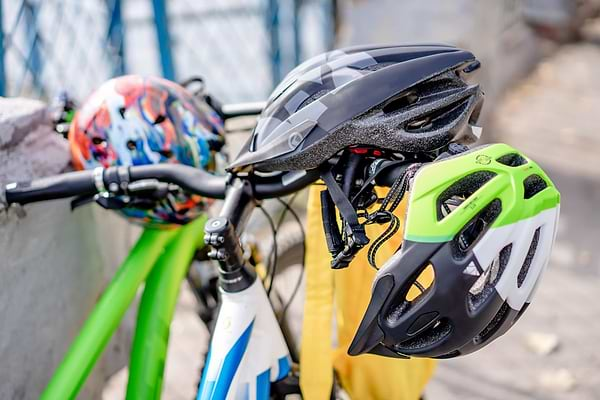
Do you actually need a helmet for skating or scooting?
There is no law in the UK forcing you to wear a helmet to skateboard, scoot or roller skate, on pavements or at a local spot. That surprises a lot of parents. What settles it instead is the venue: nearly every indoor skatepark requires a helmet, and many insist on one for under-16s or under-18s. So in practice, if your riding ever involves a park, you will need one anyway.
Do skateboarders wear helmets? At parks and on anything steep or fast, overwhelmingly yes, and all the more so for beginners. The myth worth retiring is that helmets are only for big air. The injuries a helmet prevents are usually the ordinary ones: the back of the head cracking on flat concrete after a wheel catches a stone. That is just as true for roller skating and scooting, and for kids it is the whole reason the helmet goes on first.
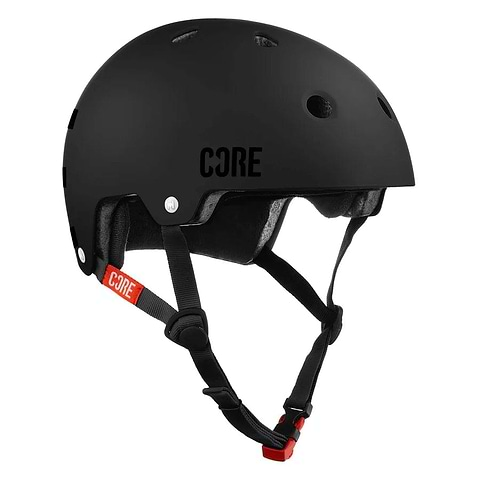
Are bike helmets and skate helmets the same thing?
They look similar from across the room, and both are trying to protect your skull, but they are designed around different accidents. Three differences matter.
Where they protect
A cyclist usually pitches forwards, often over the bars, so a bike helmet sits higher at the front and leaves the lower back of the head more open. A skater is far more likely to go down backwards, onto the back of the head. A skate helmet answers that by sitting lower and rounder, wrapping further down the back of the skull. It is not a styling choice, it is where the impacts land.
One crash, or many?
A standard bike helmet sold in the UK meets the European standard EN 1078 (you will see the CE mark), which also formally covers skateboards and roller skates, so a bike helmet is not somehow banned from skating. The catch is that EN 1078, like most foam bicycle helmets, is built around a single significant impact: the liner absorbs one big hit and is then meant to be replaced.
Skating, though, is a sport of lots of little knocks. That is why the American skateboard standard, ASTM F1492, is a multi-impact standard, and why the better skate helmets are made to shrug off repeated smaller hits rather than retire after the first. A helmet described as "dual certified" meets both a bicycle standard and ASTM F1492. One word of caution as a buyer: that phrase gets used loosely, so if multi-impact protection is what you want, look for the actual ASTM F1492 marking on the helmet or its label rather than the words on the website.
How tough the shell is
Most skate helmets use a hard outer shell (usually ABS plastic) that happily takes being scraped along a coping or dropped on concrete again and again. Many bike helmets are in-mould, a thin shell bonded straight to the foam: lighter and better vented, but less happy with repeated scuffs. At a park, that hard shell earns its keep.
So, can you use a bike helmet for skateboarding?
Here is the practical answer a specialist would give. For an occasional cruise to the shops, a gentle roll with the kids, or getting started before you have bought anything, a well-fitting CE EN 1078 bike helmet is legitimately certified and vastly better than nothing. Do not let not owning a skate helmet be the reason someone rides bare-headed.
But if you or your child ride regularly, a dedicated skate helmet is the right tool, and the reasons stack up: more cover where skaters land, a tougher shell for the daily scrapes, a lower rounder shape that stays put, and ideally that multi-impact rating. The same logic applies to roller skating. Can you use a bike helmet for roller skating to potter up the street? Yes. For rink speed, ramps or a kid who falls twenty times an hour, a skate helmet is the better buy. For younger riders especially, it is worth looking at purpose-made children's helmets, sized and shaped for smaller heads.
How should a skate helmet fit?
A helmet only works if it fits, and this is where a surprising number go wrong: the best skate helmet in the shop is useless perched on the back of the head like a cap.
Start by measuring. Run a soft tape measure around the widest part of the head, roughly a centimetre above the eyebrows and ears, and match that to the brand's size chart rather than guessing small, medium or large. It should then sit level and low, the front rim one to two finger-widths above the eyebrows, not tipped back off the forehead.
Then do the shake test: with the chin strap undone, nod and shake your head firmly. A good fit moves the skin of your forehead rather than sliding or rocking. The straps should form a neat V just under each ear, and the buckled chin strap should leave room for only a finger or so. Most skate helmets come with removable foam pads of different thicknesses, so if it is close but not quite, swap pads to dial it in rather than living with a wobble.
When to replace it
Treat any helmet as a one-crash item for the big one: if it takes a serious impact, the foam has done its job by crushing, even if the shell looks fine, and it should be retired. Multi-impact skate helmets tolerate everyday small knocks far better, but a genuinely hard crack still means replacement. Beyond crashes, foam, glue and straps slowly age, so a helmet a few years old is worth replacing even without a serious hit. Keep it out of a hot car boot, where heat degrades the liner.
None of this needs overthinking. A bike helmet will get you rolling safely today, and if skating becomes a regular thing, a skate helmet that fits is one of the best value purchases in the sport. Buy the fit first, the look second, and wear it every session.


