
Scooter Forks Buying Guide
Scooter forks might seem simple, but they play a crucial role in how your scooter performs. Whether you're upgrading your current setup or replacing damaged parts, selecting the right fork is key to enjoying a smoother, safer ride and achieving better trick performance. This guide will clearly explain everything you need to know about scooter forks.
What Does a Scooter Fork Do?
The scooter fork connects your front wheel to the scooter's deck and bars. It directly affects steering, balance, and the types of wheels you can fit onto your scooter. A sturdy and compatible fork ensures stability during tricks and smoother handling.
Scooter Fork Anatomy
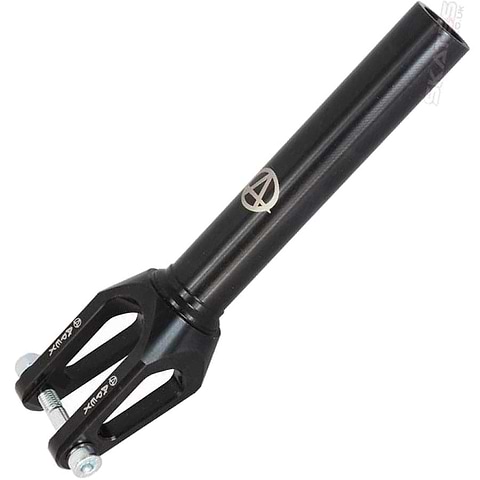
Steerer Tube: The vertical tube that attaches directly to your handlebars via a compression system.
Fork Crown: Sits at the bottom of the steerer tube, holding the crown race from the headset.
Fork Legs/Blades: These extend downward, holding your wheel in place with the axle.
Axle Mount: The slot in the fork legs where the wheel and axle fit.
Wheel Offset: Determines how far forward your wheel sits from the steering axis, influencing handling.
Fork Types: Threaded vs. Threadless
Threaded Forks
Threaded forks are commonly found on beginner scooters. They screw directly into a threaded headset. While affordable, they're less durable and harder to maintain, making them unsuitable for intense riding or tricks.
Threadless Forks
Preferred by experienced riders and professionals, threadless forks use a compression system for strength and reliability. They withstand heavy use, making them ideal for performing tricks and jumps.
Compression Systems
Standard Compression System (SCS): Known for strength and reliability, it works with both standard and oversized bars.
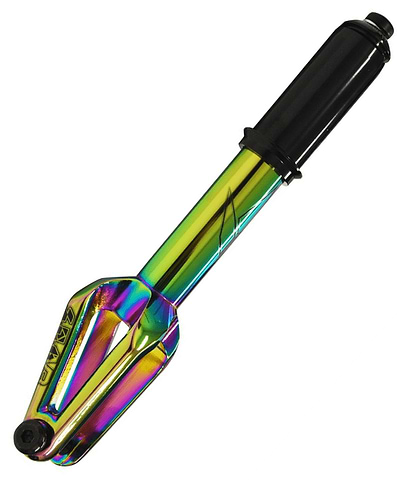
Hidden Internal Compression (HIC): Suitable for oversized bars, easy to install, and highly durable.
Internal Hidden Compression (IHC): Lightest setup, designed for standard bars, ideal for reducing scooter weight.
Inverted Compression System (ICS): The least common, this system involves a compression bolt that screws upward through the fork.
Wheel Compatibility
Wheel Diameter: The most common scooter wheels are 110mm, but many forks can fit wheels up to 125mm. Always check your fork specifications before purchasing wheels.
Wheel Width: Wheel widths range from 24mm to 30mm. Forks often come with spacers allowing narrower wheels to fit comfortably. Check compatibility before buying wheels to avoid fitment issues.
Axle Diameter: The standard scooter axle diameter is 8mm. However, newer 12 Standard (12STD) forks accommodate 12mm axles, offering enhanced strength and stability, but require special wheels and bearings.
What Is Wheel Offset?
Wheel offset describes the distance between the steering axis and the centre of the wheel axle. Standard offset (around 10mm) gives more stability and predictable steering, ideal for beginners and cruising. Zero offset provides greater agility and responsiveness, preferred by experienced riders for tricks and spins.
Materials and Weight
Most scooter forks are constructed from aluminium, providing a good balance of durability and lightness. Higher-quality forks use one-piece aluminium constructions for extra strength. While lightweight forks are ideal for tricks and jumps, heavier forks might offer additional stability.
Choosing the Right Fork for Your Skill Level
Beginners
For beginners or recreational riders, threaded forks may suffice due to affordability. But upgrading to a basic threadless fork and compression system will significantly enhance durability and performance.
Intermediate
Intermediate riders should consider threadless forks with either HIC or IHC compression, offering enhanced strength without excessive weight.
Advanced Riders
Experienced riders should opt for lightweight threadless forks with SCS, HIC, or IHC compression systems, as these offer optimal performance, durability, and responsiveness needed for advanced tricks.
Expert Tips and FAQs
What size scooter fork do I need?: Check the wheel diameter and width compatibility, typically 110mm to 125mm diameter, and 24mm to 30mm width.
Can I use any wheel with my scooter fork?: No, wheels must match your fork's specified diameter and width.
How do I install a threadless fork?: You'll need a compatible threadless headset and a suitable compression system (SCS, HIC, IHC). Installation involves securing the fork through the headtube and tightening it with the chosen compression system.
What's the difference between SCS and HIC compression?: SCS uses a clamp without slits in the bars, providing excellent strength. HIC is lighter, requires oversized bars with slits, and uses a shim for compression.
Do scooter forks come with axles?: Most forks come with compatible axles, but always double-check before purchasing.
Are aluminium forks strong enough for advanced tricks?: Yes, high-quality one-piece aluminium forks are specifically designed to withstand the demands of advanced riders.
What is the 12STD scooter fork?: 12 Standard forks fit larger 12mm axles, offering greater stability and durability. They require specially sized wheels and bearings.
How often should I replace my scooter fork?: Replace your fork if you notice cracks, significant damage, or if it affects steering and performance noticeably.
This comprehensive guide ensures you pick the perfect scooter fork tailored exactly to your riding style, skill level, and compatibility needs.


