
-
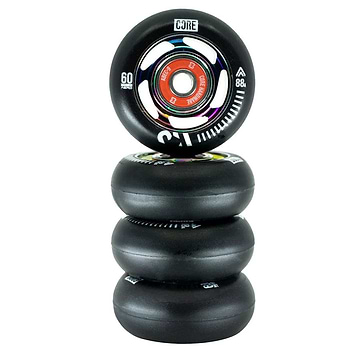
CORE Aero 88A Inline Skates Wheels - Neochrome 60mm
Regular price £39.95Regular priceUnit price / per£39.95Sale price £39.95

Why buy Inline Skate Wheels?
What is wheel durometer?
It measures wheel hardness on the “A” scale. Softer wheels (78–82A) offer better grip and shock absorption on rough surfaces, while harder wheels (85–90A) are faster and more durable on smooth surfaces.
How often should I rotate inline skate wheels?
Rotate wheels every 10–15 hours of skating to even out wear. Swap the wheels in an “X” pattern (e.g., front left to back right) to maximise lifespan.
What bearings should I use?
Wheel bearings are rated using ABEC or other standards. ABEC‑7 or ABEC‑9 bearings offer smooth rolling for fitness and speed skating, while aggressive skaters may prefer durable, low‑maintenance bearings designed for impact.
Are all wheels compatible with all skates?
No. Check your skate’s frame spacing and axle diameter. Some skates only fit certain wheel sizes or require specific spacers. Always match wheel size and hardness to your skating style and frame.
How do I replace inline skate wheels?
Remove the axles with an Allen key, pull out the old wheels and swap bearings into the new wheels if needed. Insert the new wheels into the frame, align the spacers and tighten the axles securely.
How can I tell when wheels need replacing?
Wheels should be replaced when they develop a pronounced “coning” shape, lose their grip or wear down to the hub. Riding on worn wheels reduces control and can damage the frame.
Should I mix wheel sizes?
Some skaters use “rocker” setups with slightly smaller front and back wheels for increased agility. Mixing sizes can improve turning but may sacrifice speed and stability. Choose based on your experience and skating goals.
What is wheel durometer?
What is wheel durometer?
It measures wheel hardness on the “A” scale. Softer wheels (78–82A) offer better grip and shock absorption on rough surfaces, while harder wheels (85–90A) are faster and more durable on smooth surfaces.
How often should I rotate inline skate wheels?
How often should I rotate inline skate wheels?
Rotate wheels every 10–15 hours of skating to even out wear. Swap the wheels in an “X” pattern (e.g., front left to back right) to maximise lifespan.
What bearings should I use?
What bearings should I use?
Wheel bearings are rated using ABEC or other standards. ABEC‑7 or ABEC‑9 bearings offer smooth rolling for fitness and speed skating, while aggressive skaters may prefer durable, low‑maintenance bearings designed for impact.
Are all wheels compatible with all skates?
Are all wheels compatible with all skates?
No. Check your skate’s frame spacing and axle diameter. Some skates only fit certain wheel sizes or require specific spacers. Always match wheel size and hardness to your skating style and frame.
How do I replace inline skate wheels?
How do I replace inline skate wheels?
Remove the axles with an Allen key, pull out the old wheels and swap bearings into the new wheels if needed. Insert the new wheels into the frame, align the spacers and tighten the axles securely.
How can I tell when wheels need replacing?
How can I tell when wheels need replacing?
Wheels should be replaced when they develop a pronounced “coning” shape, lose their grip or wear down to the hub. Riding on worn wheels reduces control and can damage the frame.
Should I mix wheel sizes?
Should I mix wheel sizes?
Some skaters use “rocker” setups with slightly smaller front and back wheels for increased agility. Mixing sizes can improve turning but may sacrifice speed and stability. Choose based on your experience and skating goals.


