
How to Clean Skateboard Bearings
You know the sound. You push off, the skateboard rolls a couple of metres and then just... gives up. Where there used to be a smooth glide there is now a dry, gritty rasp, and you are pushing twice as often to go half as far. Nine times out of ten the culprit is not your wheels, your trucks or your technique. It is eight tiny steel rings packed with grit: your bearings.
Bearings are the unsung heroes of anything with wheels, and the one part almost nobody looks after until the roll disappears completely. The good news is that cleaning them is a cheap, satisfying, twenty-minute job you can do on a kitchen table, and it works exactly the same whether you ride a skateboard, a stunt scooter or a pair of skates. Here is how to bring them back to life.

What bearings actually do (and why they slow down)
A bearing is a sealed ring of small steel balls that lets your wheel spin freely around the axle. Each wheel holds two, so a standard board runs eight. Clean and lightly oiled, those balls roll with almost no friction. Once dirt, grit or (worst of all) water works its way inside, friction shoots up, the oil turns to a grinding paste, and your roll dies.
This matters far beyond skateboards. The wheels on your inline skates and quad roller skates rely on exactly the same part, so a slow, scratchy session usually points straight back to neglected bearings rather than anything more expensive.
Are all skate bearings the same?
Mostly, yes, and that is what makes maintenance so easy. Almost every skateboard, scooter, roller skate and inline skate uses the same bearing size, known as a 608: an 8mm bore, a 22mm outer diameter and a 7mm width. So the answer to "are scooter bearings the same as skateboard bearings?" is that they are the same size and clean the same way. You can treat a drawer of mixed scooter parts and skate wheels as one job.
What varies is the quality: the seal, the cage that holds the balls, and the material. Those differences affect how long a bearing lasts and how well it keeps dirt out, but they do not change the cleaning routine one bit.
How often should you clean them?
There is no fixed schedule, so let the wheels tell you. Flick a wheel with your finger: a healthy bearing spins freely for several seconds and winds down smoothly. If it stops almost immediately, feels notchy, or rattles and grinds, it is time. A park and street rider might clean every month or two, while anyone who has ridden through puddles or wet grass should do it the same day, because standing water is what turns steel bearings to rust.
What you will need
- A solvent to dissolve the old grease: isopropyl alcohol or surgical spirit is ideal, and a citrus degreaser works well too.
- A small sealable jar, or a dedicated bearing-cleaning tube.
- A pin or craft knife to lift the bearing shields.
- A clean, lint-free cloth.
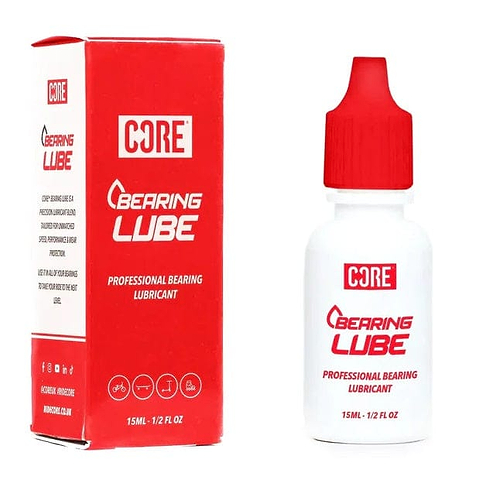
- Proper skate bearing lubricant (a light speed oil). This is the one item worth buying rather than improvising, as the next section explains.
Is WD-40 good for skateboard bearings?
Short answer: no, not as a lubricant. WD-40 and three-in-one oil are degreasers and water-displacers first. They will happily flush the muck out of a bearing, but they are too thin to stay put, so they leave your bearings running dry within a day or two. Spray WD-40 in and nothing else, and you will be back to grinding wheels by the weekend.
Nail polish remover (acetone) comes up a lot too. It cleans brilliantly but can attack the rubber seals and nylon cages inside some bearings, so only use it with the shields removed and never leave them soaking. For most people, isopropyl alcohol to clean followed by a couple of drops of real bearing oil is the safe, lasting combination.
How to clean skateboard bearings, step by step
1. Remove the wheels
Use a skate tool or a 13mm socket to undo the axle nuts and slide the wheels off. Keep the nuts, washers and speed rings somewhere safe so none go walkabout.
2. Get the bearings out of the wheels
This looks tricky and is not. Slide a wheel partway back onto the axle so it catches the lip of one bearing, then lever the wheel sideways and the bearing pops out with a satisfying click. Flip the wheel and repeat for the second one.
3. Lift the shields
Most bearings have a removable shield on one or both sides. Slide a pin under the edge of the shield, or pop out the C-clip if there is one, and lift it off gently. This lets the solvent actually reach the balls.
4. Soak and agitate
Drop the bearings into your jar of solvent, seal it, and shake for a minute or two. You will see the old grease cloud the liquid. Leave stubborn ones to soak for ten minutes, then shake again and spin each bearing to work the balls loose.
5. Dry them completely
This step is non-negotiable. Lay the bearings on a cloth to dry fully, or blow them out with compressed air. Any solvent or moisture trapped inside will cause rust, the very thing you are trying to prevent. Give each one a spin to check it runs free and quiet.
6. Re-lubricate
Two or three drops of bearing oil each is plenty. More is not better: too much oil just attracts dirt. Add the drops, spin to spread the oil evenly, then refit the shields.
7. Reassemble
Press the bearings back into the wheels by hand, refit the wheels with their washers and speed rings, and nip the axle nuts up so each wheel spins freely without side-to-side wobble. Flick a wheel and listen: that long, quiet spin is the sound of a job done.
Steel or ceramic, and what does ABEC mean?
You will see bearings sold with an ABEC rating (usually 1, 3, 5, 7 or 9), a precision standard where a higher number means tighter tolerances. It is a rough guide at best for skating, because it says nothing about the seals, the lubricant or how well a bearing shrugs off grit, which are what actually matter on a skatepark. A well-maintained ABEC 5 will out-roll a neglected ABEC 9 every time.
So are ceramic bearings worth it? Ceramic balls are harder, lighter and do not rust, and a good set can run faster for longer, but they cost far more and still need cleaning. For most beginner and intermediate riders your money is better spent elsewhere, because clean steel bearings and a proper maintenance habit give you most of the benefit for a fraction of the price.
One routine for every wheel you own
Because that humble 608 bearing is near-universal, once you have cleaned one set you can clean them all, whether it is a cruiser, a park setup, your inline skates or a pair of quads. Prevention then beats cleaning every time: moisture is a bearing's worst enemy, so avoid puddles and wet grass, and if you do get caught out, dry your wheels and pop the bearings out the same day rather than letting rust take hold overnight. Store your kit somewhere dry, flick-test your wheels now and then, and a quick clean every month or two will keep any setup rolling smooth and quiet for years.


