
How to Ollie on a Skateboard: The First Trick That Changed Everything
Ask any skater about the moment skateboarding really clicked for them and many will point to the same thing: the first time their board left the ground with them still on it. That is the ollie, and it quietly sits underneath almost everything else in modern skating. Kickflips, grinds, jumping a set of stairs, hopping a kerb on the way to the shops: nearly all of it starts with learning to pop an ollie. Get this one trick dialled and the rest of skateboarding opens up in front of you.
If you are just starting out, or you are a parent watching someone chip away at it in the driveway, this is a guide to what the ollie actually is, where it came from, and how to build up to your own. You will need patience more than anything, but a decent setup helps too, so if you are still choosing your first board, our range of skateboards is a sensible place to start. A wobbly, badly set-up deck makes an already tricky move harder than it needs to be.
What is an ollie?
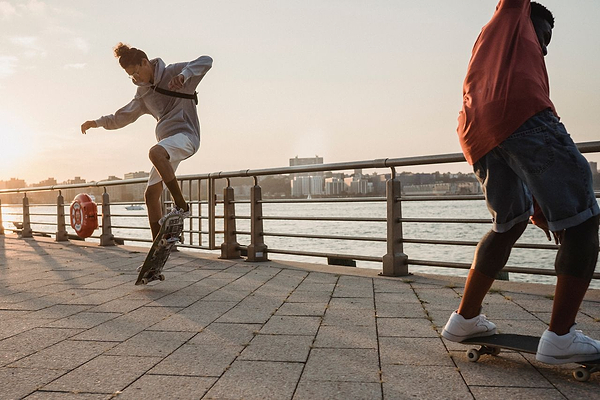
An ollie is a jump where the skateboard appears to stick to your feet and rise into the air with you, without you reaching down to grab it. It looks like magic, but it is really clever timing: you snap the tail down against the ground to make it pop up, slide your front foot forward to level the board out, and land back on the bolts. The ollie skateboard trick is the foundation for street and park skating alike, which is why nailing it feels like such a milestone.
A quick history: from a Florida pool to flat ground
The ollie was not always around. In the 1970s, getting a skateboard airborne meant grabbing it with your hand. Then a Florida teenager called Alan Gelfand, nicknamed "Ollie", worked out how to launch out of a pool and off ramps with no hands at all, in around 1978. His nickname stuck to the trick forever.
For a few years the ollie lived only on vert ramps and in bowls. The real leap came in 1982, when Rodney Mullen worked out how to do it on flat ground, popping the tail and dragging his front foot to lift the whole board out of nothing. That single adaptation is arguably the most important moment in skateboarding history, because it turned pavements, kerbs, benches and handrails into a playground. Almost every street trick you see today is built on Mullen's flat-ground ollie.
Before you ollie: get comfortable riding first
It is tempting to try to ollie on day one, but it becomes far easier if you can already ride confidently. Learning how to ride a skateboard properly means being able to roll, turn and balance while moving, without thinking about your feet. Spend real time just cruising a flat, smooth car park or path until pushing and rolling feels natural.
This is also the moment to sort your protection. Plenty of early attempts end with the deck shooting out sideways, so a well-fitting helmet is non-negotiable, and wrist guards, knee pads and elbow pads will save you a lot of grief while you are falling more than landing. Skating scared makes you tentative, and tentative ollies do not pop. Padding up lets you commit.
How to ollie on a skateboard, step by step
Most people learn the ollie standing still first, then take it rolling once the motion feels repeatable. Here is how to pop an ollie broken down into its parts.
1. Set your feet
Place your back foot on the very tail of the board, with the ball of your foot ready to snap it down. Your front foot sits around the middle of the deck, or just behind the front bolts, angled slightly. Foot position is personal, so expect to shuffle it about until it feels right for you.
2. Pop the tail
Bend your knees, then snap your back foot down hard so the tail cracks against the ground. This "pop" is what launches the board upward. It should be a sharp, decisive strike, not a slow press. The sound of a good pop is unmistakable, and it is the single most important part of the whole trick.
3. Drag your front foot
At the instant the tail hits, slide the outside edge of your front foot up towards the nose of the board. This drag is what levels the deck out and pulls it up to meet your feet. Beginners often forget this step and wonder why the board just flips or falls away. Pop and slide almost together, with the slide a fraction behind the pop.
4. Level out and land
As the board rises, lift your back foot too and let both knees come up towards your chest. For a split second the board should be flat and floating under you. Then guide it back down and aim to land with both feet over the bolts, knees bent to soak up the impact. Rolling away, even a few centimetres, is a real ollie.
Why won't my ollie come up? Common mistakes
Almost everyone gets stuck in the same places. If the board is not lifting at all, your pop is too soft, or you are pressing rather than snapping. If the nose flies up but the tail stays low, you are not dragging your front foot enough. If the board shoots out in front of you, you are popping without jumping, so your body stays on the ground while the board leaves. And if you keep landing sideways, check that your shoulders stay square over the deck rather than twisting away.
The fix for all of these is nearly always the same: slow down, break the movement into pop and slide, and do dozens of stationary attempts before worrying about height. Height comes from timing, not from trying harder.
How long does it take to learn?
The ollie humbles people. Some riders roll away with a small one inside a week, while plenty of others spend a month or two before it clicks. That is normal, and part of why landing your first proper one feels so good. Short, frequent sessions beat occasional marathons, because you are learning a precise piece of timing that needs repetition to stick.
A few things speed it up. Film yourself, because a five-second clip shows instantly whether you are dragging your foot or not. Practise the pop on its own until the sound is crisp. And skate with people who are a bit better than you, since watching a good ollie up close teaches more than any amount of reading.
The trick that keeps on giving
The ollie is not a trick you learn once and move past. Riders with decades behind them still work on popping higher, floating longer and landing cleaner, because the ollie hides inside almost everything else. Every time you raise it a little, a new set of tricks and obstacles comes within reach. So be patient with the early weeks of pops that go nowhere: you are learning the move that unlocks the rest of skateboarding. Grab your board, pad up, find a quiet bit of flat ground, and start snapping that tail.


