
Skatepark Etiquette: The Unwritten Rules Every Beginner Should Know
Walk up to a busy skatepark on a warm afternoon and it can look like beautiful chaos. Scooters, boards, inline skates and BMX bikes all weaving across the same concrete, somehow never colliding. It is not luck. Every park runs on a set of unwritten rules that riders pick up by watching, and once you know them the place stops feeling intimidating and starts feeling like home. This is a guide to that hidden code: how to take your turn, stay out of trouble and earn a bit of respect on your first skatepark session, whatever you ride.
Why etiquette matters more than tricks
Skateparks are shared spaces with no referee. What keeps them working is a quiet agreement between everyone using them: watch out for each other, wait your turn and clean up your own mistakes. Good etiquette is not about being timid. It is about being predictable, because predictable riders are safe riders. When people can read what you are about to do, they can flow around you, and that is when a busy park feels effortless rather than dangerous.
The good news for beginners and for parents standing nervously by the fence is that nobody expects you to be good. Regulars were all beginners once. What they do expect is that you understand a handful of basic courtesies. Get those right and you will be welcomed far more warmly than the flashiest rider who hogs the park.
Rule one: know where to stand
The single most common beginner mistake is standing in the wrong place. Never stop and rest at the bottom of a ramp, on a landing, or in the middle of a line where riders build up speed. These are the busiest, fastest parts of the park and someone dropping in has no way to stop for you.
Instead, wait on the deck (the flat platform at the top of a ramp) or off to the side where you have a clear view of the whole park. Keep your board, scooter or skates tucked in close so nobody trips over them. If you are a parent watching a young child, keep them beside you at the edge rather than wandering across the flat. A skatepark is one of the few places where standing still in the wrong spot is more dangerous than moving.
Rule two: take turns, do not snake
"Snaking" is the cardinal sin of the skatepark. It means dropping in or cutting across when it is not your turn, forcing another rider to bail. Parks do not work in strict queues, but they do run on a loose rhythm: riders take it in turns to have a run, roughly in the order they arrived at the top.
The way to read it is simple. Watch, make eye contact, and wait for a natural gap. If two of you go for the same moment, a quick nod or a raised hand sorts out who goes first. When in doubt, hang back and let the other person take it. You will get your run in seconds, and you will have shown you understand how the place works. Over a session this back and forth becomes almost automatic, and it is genuinely satisfying once it clicks.
Rule three: own your bails
Everyone falls, and everyone loses control of their equipment now and then. What matters is what you do next. If your scooter or board shoots off across the park, retrieve it quickly and safely rather than leaving it as a hazard. If you go down, get up and move to the side as soon as you can. A loose board rolling across a transition is one of the most common causes of collisions, so keeping track of your kit is a real courtesy, not just tidiness.
Rule four: everyone shares the concrete
Modern parks are wonderfully mixed. On the same session you will see skateboarders, scooter riders, inline skaters and the occasional BMX. There is an old and mostly good natured rivalry between some of these groups, but the etiquette is identical for all of them: respect the flow, wait your turn, and do not assume the park belongs to your discipline. If you are working out whether you are more of a park or street rider, our park or street rider guide is a useful place to start, because the terrain you prefer shapes how and where you will fit into a session.
Younger riders and beginners often feel safest at quieter times. Early on a weekday morning, or the first hour after a park opens, tends to be calmer than a Saturday afternoon in the school holidays. There is no shame in choosing your moment while you build confidence.
Rule five: gear up, it is part of the culture
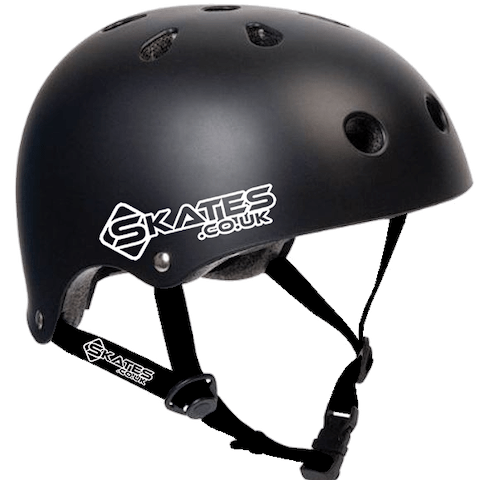
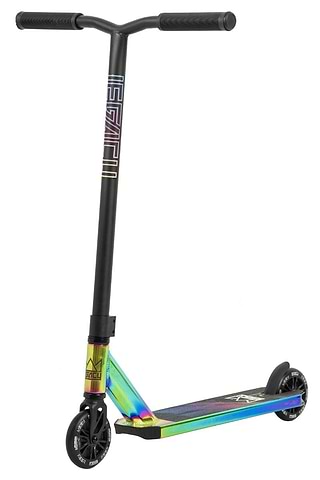
There is a myth that pads are uncool. The riders who actually push themselves, and keep riding for years, are almost always the ones wearing proper protection. Concrete does not forgive, and a broken wrist keeps you off your stunt scooter or skateboard for weeks. A helmet, wrist guards, and knee and elbow pads are the sensible baseline, especially while you are learning.
For children, many parks and clubs simply require a well-fitted helmet before you are allowed to ride, so it is worth checking local rules. A helmet that fits properly, sitting level and snug without wobbling, is far more effective than an expensive one worn loose. Protection is not a sign that you are a beginner. It is a sign that you plan to keep riding.
Reading the room on your first visit
If it is your very first session, spend the first few minutes just watching. See where riders start their runs, where they wait, and how the flow moves around the park. You will learn more in five minutes of observation than in an hour of guessing. Start on the flat or the smallest ramp, get comfortable rolling and stopping, and only move up to bigger features when you can control your speed.
A few small things go a long way. Say hello, keep your music to headphones rather than a speaker, take your litter home, and be encouraging to other beginners. Skateparks have a strong culture of people cheering on a trick that finally lands, no matter how basic. Join in with that and you become part of the scene rather than just a visitor to it.
The rules behind the rules
Strip away the specifics and skatepark etiquette comes down to three ideas: be aware, be patient and be respectful. Watch what is happening around you, wait for your moment instead of forcing it, and treat the space and the people in it well. Do that and you will find skateparks are some of the most welcoming places around, full of people who remember exactly how it felt to roll up nervous on day one. Learn the unwritten rules, protect yourself properly, and the concrete quickly stops being intimidating and starts being the best part of your week.


