
Balance Bike Buying Guide UK – How to Choose the Right First Bike for Your Child
If you have a toddler or pre-schooler eager to explore the world on two wheels, a balance bike can be the perfect way to start. These simple, pedal-free bikes are designed to help children develop balance, steering and confidence before they move on to a pedal bike. Whether you are choosing your child’s very first bike or upgrading to a larger size, this guide will walk you through everything you need to know, from sizing and safety to key features and value for money.
What is a Balance Bike
A balance bike is a small, lightweight bike with no pedals, chain or stabilisers. Instead of pedalling, children use their feet to push along the ground, then lift their feet to glide once they gain momentum. This helps them master balance and steering without the added complication of pedalling. Most children learn to ride a balance bike quickly, and the transition to a pedal bike becomes much easier as they have already developed core cycling skills.
Why Start with a Balance Bike
Learning to ride on a balance bike encourages children to focus on balancing, which is the hardest part of cycling. Bikes with stabilisers can delay the process because the rider relies on them for support, meaning balance still has to be learned later. With a balance bike, there’s no sudden removal of stabilisers – just a smooth and natural progression to pedals. They are also light, easy to manoeuvre and suitable for use in many places, from the garden to the local park.
Choosing the Right Size
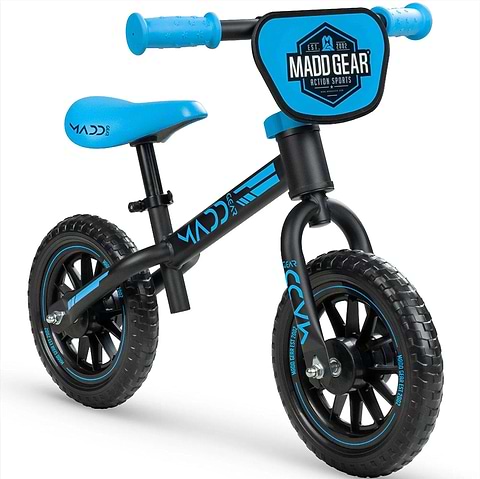
Getting the right size balance bike is essential for your child’s comfort, confidence and safety. The most important measurement is your child’s inseam – the distance from the top of the inside leg to the ground while standing in shoes. The seat height should be about 1 to 2 cm less than this measurement so your child can place both feet flat on the ground with a slight bend in the knees. This position allows them to push off, glide and stop with ease. It’s also worth checking the maximum seat height so the bike can grow with your child.
Wheel size alone is not a reliable guide to fit. Two balance bikes with the same wheel diameter can suit very different ages depending on their frame design and seat adjustment range. Always check the seat height specifications before buying.
Weight and Frame Material
A bike that is too heavy will be harder for a young rider to control and can make the learning process frustrating. As a general rule, aim for a bike that weighs no more than 30% of your child’s weight. Aluminium frames tend to be lighter and rust-resistant, while steel frames can be more affordable but heavier. Wooden balance bikes are an option too, offering a classic look, though they may have less adjustability.
Tyre Types
There are two main tyre options. Foam tyres are lightweight and puncture-proof, making them low maintenance and suitable for smooth surfaces. Air-filled (pneumatic) tyres offer better cushioning and grip, especially on rougher terrain, but require more upkeep. If your child will be riding on varied surfaces or tackling small bumps and kerbs, air tyres are generally worth the investment.
Brakes
Many balance bikes do not have brakes, relying on children to slow down with their feet. While this works well at slower speeds, a hand brake can be a useful addition for more confident riders, helping them learn an important skill early and saving wear on shoes. The brake lever should be small enough for little hands to reach and light enough to pull comfortably.
Steering and Handlebars
A smooth-turning headset helps with control and comfort. Some models have a steering limiter to prevent the handlebars from turning too far, which can help beginners avoid sudden twists, though more experienced riders may prefer unrestricted movement. Look for comfortable handlebar grips with protective ends to stop hands slipping off or getting caught in a fall.
Saddle and Footrests
A well-shaped, slightly concave saddle will help your child stay in position as they ride. The saddle height should be easily adjustable without specialist tools so you can raise it as your child grows. Some bikes have a small footrest for gliding, ideally positioned so it doesn’t get in the way while pushing.
Bearings and Build Quality
Good-quality wheel bearings make the ride smoother and require less effort, especially on longer glides. Sealed bearings keep out dirt and moisture, reducing maintenance and increasing lifespan. Also check that bolts are either recessed or have protective covers to prevent scratches to little legs.
Frequently Asked Questions
What age is best for a balance bike?
Most children start between 18 months and 3 years, but there are models for older children too. The key factor is whether they can sit on the saddle with feet flat on the ground.
Do I need to buy a balance bike with brakes?
Not always. Beginners usually stop with their feet, but a brake can help more confident riders, especially on slopes, and prepares them for pedal bikes.
Should I choose foam tyres or air tyres?
Foam tyres are lighter and puncture-proof, making them easy to look after. Air tyres give better grip and comfort, especially on uneven surfaces.
How long will my child use a balance bike?
Most children use them for one to three years before moving on to pedals, depending on their age when they start and how quickly they gain confidence.
Is it worth spending more on a balance bike?
Higher-quality bikes are usually lighter, more durable and easier to ride. They often last longer and can be passed on to siblings or friends.
Final Tips Before Buying
- Measure your child’s inseam and match it to the seat height range
- Choose a lightweight bike for easier handling
- Decide whether foam or air tyres are more suitable for your riding surfaces
- Consider a brake if your child is adventurous or rides on slopes
- Look for adjustability to extend the bike’s lifespan
A well-chosen balance bike can open the door to years of cycling enjoyment. By focusing on fit, comfort and quality, you’ll give your child the best possible start on their cycling journey – and you might even enjoy a few peaceful strolls alongside them while they ride.


