
Indoor vs Outdoor Roller Skate Wheels: A Guide to Hardness, Size and Grip
Ask most new skaters what makes one pair of skates roll nicely and another feel like hard work, and they will usually point at the boot or the brand. More often than not, the real answer is sitting right under their feet: the wheels. Swap a set of hard, skinny wheels for softer, grippier ones and the same skates can go from skittish to smooth and confidence-inspiring. It is the cheapest, most noticeable upgrade in skating, and yet it is the part people understand the least.
If you have ever stared at a wall of quad roller skate wheels and wondered why one set costs more, why some are soft enough to dent with a fingernail and others are rock hard, this guide is for you. We will keep the jargon to a minimum and focus on the two numbers that actually matter, then explain how they translate into the way your skating feels on a rink floor versus a bumpy pavement.
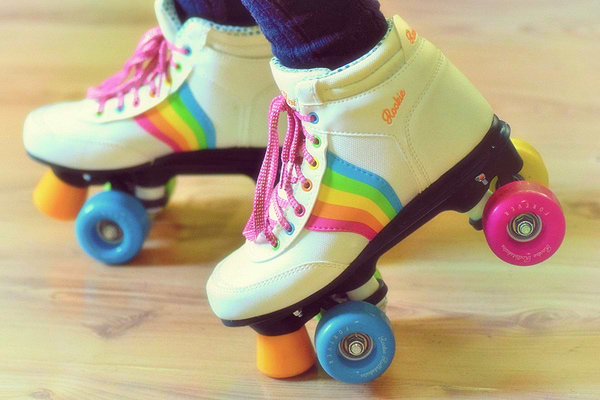
The two numbers that decide everything: hardness and size
Nearly every roller skate wheel is described by two measurements. The first is hardness, shown as a number followed by the letter A, such as 78A or 92A. This is the durometer, a standard scale that measures how firm the urethane is. Lower numbers are softer, higher numbers are harder. Most skate wheels sit between roughly 78A (very soft and grippy) and 101A (very hard and fast). The second number is diameter in millimetres, usually somewhere between 57mm and 65mm for a typical quad wheel.
Here is the part that is genuinely useful to know as a skater rather than a shopper: softer wheels grip more and soak up vibration, which makes rough ground feel smoother and keeps you planted in a turn. Harder wheels have less grip, so they roll faster and slide more easily, which is exactly what you want on a glassy indoor floor and exactly what you do not want on gritty tarmac. Everything else about wheel choice is really a variation on that single trade-off between grip and glide.
Outdoor roller skate wheels: soft is your friend
Outdoors, the ground is working against you. Pavements, car parks and promenades are rough, dusty and full of small cracks and pebbles. A soft wheel, typically in the 78A to 85A range, deforms slightly as it rolls, gripping that uneven surface and swallowing a lot of the buzz that would otherwise travel straight up into your ankles and knees. The result feels slower at first, but it is far more stable and far kinder on a longer skate. This is why softer outdoor wheels are the single best thing a beginner can put on their skates before heading out of the house.
There is a comfort angle here too. New skaters often blame their balance for the jittery feeling they get on pavements, when the real culprit is a hard indoor wheel transmitting every bump. Drop the hardness and the ground effectively gets smoother. If you are buying your first pair of quad skates mainly for outdoor use, a soft wheel should be near the top of your checklist, and our quad roller skates buying guide walks through the rest.
Indoor roller skates: harder and faster
Step onto a polished rink or sports hall floor and the maths flips. Those surfaces are already smooth, so you no longer need a wheel to absorb bumps. What you want instead is speed, easy direction changes and a predictable slide when you pivot or stop. That calls for a harder wheel, commonly 88A and up, with rink and artistic wheels often reaching the high 90s or beyond. Many people who mostly skate at a rink and own inline skates as well will notice the same rule applies there: smoother floor, harder wheel.
A soft outdoor wheel used indoors feels sticky and sluggish, almost like skating through treacle, and it makes spins and slides much harder to control. So while indoor and outdoor skating look similar, the ideal wheel for each is close to opposite.
Does diameter and width matter too?
Alongside hardness, size changes the character of a wheel. A larger diameter wheel (say 62mm or more) rolls faster and carries its speed better, but sits you a touch higher off the ground. A smaller wheel is more nimble and lower. Width matters as well: a wider wheel gives a bigger contact patch and more stability, which suits beginners and outdoor skating, while a narrower wheel is lighter and more agile, which dance and artistic skaters tend to favour.
If you are just starting out, do not overthink the millimetres. A medium diameter and a wider profile is a forgiving, stable combination, and the hardness is where you will feel the biggest difference.
Common wheel questions, answered
Are all roller skate wheels the same size?
No. Both hardness and diameter vary widely, and that is the point of having a choice. The good news is that the wheel's mounting is far more standardised than its size. Most quad wheels use the same common bearing, so a wheel that physically fits your plate can usually be swapped for another of a different size or hardness without any trouble. Always check the bearing and axle fit if you are mixing brands, but in practice most quad setups are interchangeable.
Are roller skate wheels universal?
Broadly, within quad skating, yes. Roller skate wheels are not the same as skateboard wheels, though, even when they share a bearing size: skate wheels tend to be shaped and hubbed differently, so do not assume you can move a set straight from a deck onto a plate. Within the quad world, however, you have plenty of freedom to experiment.
Can you use outdoor roller skate wheels indoors?
You can, but you probably will not enjoy it for long. Soft outdoor wheels grip a smooth rink floor so hard that the skates feel slow and reluctant to slide, which makes crossovers and stops awkward. It will not damage anything, it just works against you. If you split your time between the two, keep a second set of harder wheels to swap in for rink sessions; changing them takes only a few minutes.
How long do roller skate wheels last?
It depends almost entirely on where and how you skate. Softer wheels wear faster, and rough outdoor surfaces chew through urethane far quicker than a smooth floor. The bigger issue is usually uneven wear: because we lean on our inside edges, wheels tend to wear into a slanted, cone-shaped profile. Rotating your wheels regularly, moving them around so they all wear evenly, is the simplest habit that extends their useful life. Replace them once they are noticeably coned, cracked, or worn too small.
A simple way to choose
If you only take one thing away, make it this: decide where you will skate most, then let the ground choose your hardness. Rough and outdoors means soft, roughly 78A to 85A. Smooth and indoors means hard, roughly 88A and up. If you genuinely do both, an all-round wheel in the mid 80s is a sensible compromise. And whatever you roll on, skate within your limits and wear a well-fitted helmet, because faster, grippier wheels will carry you quicker than your stopping skills may expect.
Wheels are the part of a skate that most rewards a little knowledge. Once you understand the grip-versus-glide trade-off, you stop guessing and start choosing, and your skating improves without changing anything about your technique. If you are still weighing up quads against another style, our guide to roller skates vs inline skates is a good next read.


