
Skateboard Wheels Buying Guide – How to Choose the Right Wheels for You
Whether you’re new to skateboarding or have been rolling for years, your choice of wheels can make a bigger difference than you might think. The right skateboard wheels affect your speed, control, and comfort, and changing them can completely alter how your board feels.
This guide walks you through everything you need to know: from size and hardness to shape, materials, and how to match wheels to your riding style. By the end, you’ll know exactly what to look for and why.
Wheel Size – Diameter Matters
Skateboard wheels are measured in millimetres (mm) across the diameter. Most wheels fall between 50mm and 60mm, but even a few millimetres can make a noticeable difference.
General size guide:
| Wheel Size | Best For | Key Benefits |
|---|---|---|
| 50–53mm | Street skating, technical tricks | Lower to the ground, quick to accelerate, easier to control |
| 54–56mm | All-round use (street, park, bowls) | Good mix of speed and control, suitable for most riders |
| 56–60mm | Vert skating, ramps, cruising | Higher top speed, smoother over rough patches |
| 60mm+ | Cruisers, longboards, downhill | Very smooth ride, great for long distances, not ideal for tricks |
Quick tip:
Smaller wheels are nimbler but less forgiving on rough ground. Larger wheels roll over cracks more easily and hold speed better, but may need riser pads to avoid wheel bite (when your wheel touches the board during turns).
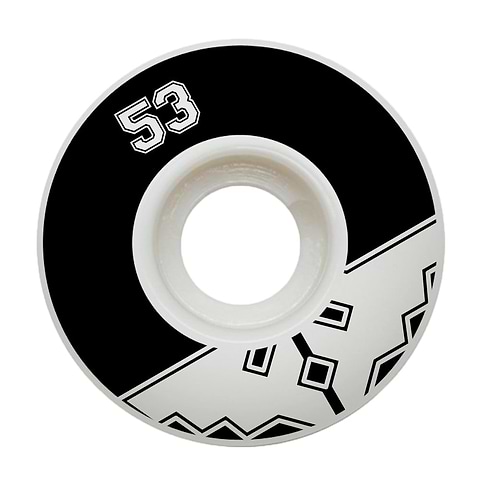
Wheel Hardness – Understanding Durometer
Hardness is measured on a durometer scale, usually the A scale (for example, 99A). Some brands also use the B scale, which reads 20 points lower but allows for extra-hard wheels (for example, 83B = 103A).
Hardness guide:
| Durometer | Feel | Best For |
|---|---|---|
| 78A–87A | Soft, grippy | Cruising, filming, rough surfaces |
| 88A–95A | Semi-soft | Rougher street skating, commuting |
| 96A–99A | Medium-hard | Street, park, ramps, bowls |
| 101A+ / 83B+ | Very hard | Technical tricks, smooth skateparks |
Quick tip:
Hard wheels are faster and slide more easily, which makes them great for smooth parks. Softer wheels grip better and soak up vibrations, making them perfect for rough tarmac or cruising.
Wheel Shape and Contact Patch
The contact patch is the part of the wheel that touches the ground. Shape affects grip, speed, and slide control.
Common shapes:
- Standard/Round lip: Versatile, responsive, good all-round choice.
- Conical: Wider contact area for grip, easier to lock into grinds.
- Radial: Smooth ride, stable for bowls and transitions.
- Square lip: Maximum grip, often used for downhill or carving.
- Cruiser: Softer urethane, rounded edges for comfort on long rides.
Quick tip:
A wider contact patch gives you more grip and stability, while a narrower patch is lighter and more responsive for tricks.
Materials – Why Polyurethane Wins
Almost all skateboard wheels are made from polyurethane (PU), a material prized for its balance of grip, rebound, and durability.
Different urethane formulas change how the wheel behaves. Some are designed to resist flatspots (worn patches from sliding), while others prioritise rebound for faster acceleration.
History note: Before urethane arrived in the late 1960s, wheels were made from clay or metal. Skating was much rougher back then. PU transformed the sport by making it faster, smoother, and more controlled.
Matching Wheels to Your Style
Here’s a quick reference for pairing wheel specs with different riding styles:
| Style | Size | Hardness | Shape |
|---|---|---|---|
| Street / Technical | 50–54mm | 96A–101A | Standard or conical |
| Park / Bowl | 53–56mm | 99A–101A | Radial or conical |
| Vert / Ramp | 55–60mm | 99A–101A | Wide contact patch |
| Cruising / Commuting | 54–65mm | 78A–87A | Cruiser / square lip |
| Downhill / Carving | 60mm+ | 78A–85A | Square lip |
Maintenance Tips
- Rotate your wheels regularly to prevent uneven wear.
- Check for flatspots — a sign it’s time for a replacement.
- Clean your bearings when performance drops (bearings are sold separately but essential to wheel function).
- Store your skateboard somewhere cool and dry to avoid urethane cracking.
Frequently Asked Questions
Do I need riser pads for larger wheels?
If you’re using wheels 56mm or bigger, riser pads can help prevent wheel bite, especially if you ride loose trucks.
How often should I replace my skateboard wheels?
It depends on how much you skate and your style. Heavy street skaters may replace wheels every few months, while casual riders can go a year or more before needing new ones.
What’s the difference between park wheels and street wheels?
Park wheels are usually a little harder and slightly larger for speed on smooth surfaces. Street wheels tend to be smaller for technical tricks and may have more slide control.
Are softer wheels slower?
Yes. Softer wheels grip more and roll smoother over rough ground, but they don’t reach the same top speeds as hard wheels on smooth surfaces.
Can I use cruiser wheels on my regular skateboard?
Yes, but you might need risers and you’ll lose some responsiveness for tricks. They’re great if you want to use your regular deck for smooth cruising.
What causes flatspots?
Flatspots usually happen from power slides or sudden stops where the wheel skids without rolling. Good quality wheels are more resistant, but it’s a normal part of wear over time.
Final Thoughts
Choosing skateboard wheels isn’t just about looks or matching your deck. It’s about finding the perfect combination of size, hardness, and shape for how you skate.
If you’re new, start with a 52–54mm wheel around 99A hardness. It’s a safe all-rounder for both street and park. As you develop your style, you can experiment with different wheels to fine-tune your setup.
The right wheels will make your ride smoother, faster, and more enjoyable, whether you’re pushing to the shops, learning your first kickflip, or carving a bowl.


