
-
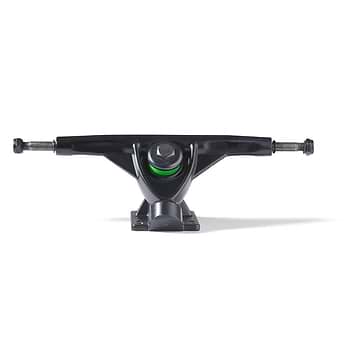
Mindless RK Black Longboard Trucks (Pair) - 177mm
Save 14%Regular price £29.95Regular priceUnit price / per£34.95Sale price £29.95Sale -
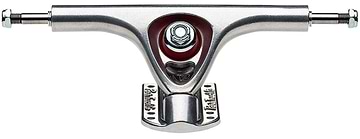
Paris V3 Polished Chrome Longboard Trucks (Pair) - 180mm
Regular price £59.90Regular priceUnit price / per£59.90Sale price £59.90 -
Paris V2 Black Longboard Riser Pads (Pair) - 1/4"
Save 25%Regular price £2.95Regular priceUnit price / per£3.95Sale price £2.95Sale



Why buy Longboard Trucks?
What widths do longboard trucks come in?
Common widths range from 150 mm to 184 mm. Match the truck hanger width to your deck width—longboard decks usually require wider trucks (e.g., 180 mm) to keep wheels aligned with the deck edges.
How does baseplate angle affect turning?
Higher baseplate angles (45–50°) increase turn sensitivity, ideal for carving and dancing. Lower angles (40° or less) reduce turn sensitivity, adding stability for downhill. Many riders mix angles (e.g., 50° front, 40° rear) to balance agility and stability.
Are precision trucks necessary?
Precision trucks are CNC-machined from billet aluminium, offering tighter tolerances and smoother turning. They reduce slop and are preferred by serious downhill racers. Cast trucks are more affordable and suit most riders.
What materials are used?
Standard trucks use cast aluminium hangers with steel axles. Higher-end trucks may use forged or CNC-machined aluminium, titanium axles or magnesium. Materials influence weight, durability and price.
How do I install trucks on a drop-through deck?
For drop-through decks, remove the baseplate from the hanger. Insert the baseplate through the cutout from below, align the holes and secure with hardware. Then reattach the hanger. Drop-through mounting lowers the ride height for increased stability.
What is rake?
Rake refers to the offset between the hanger’s pivot axis and the axle. Positive rake (axle in front) increases turn responsiveness; negative rake reduces it. Rake influences how quickly the truck enters and exits turns.
Do longboard trucks require bushings?
Yes. Trucks include stock bushings, but swapping them for aftermarket ones changes how the truck turns. Combine bushings with the right washers to fine-tune responsiveness.
What widths do longboard trucks come in?
What widths do longboard trucks come in?
Common widths range from 150 mm to 184 mm. Match the truck hanger width to your deck width—longboard decks usually require wider trucks (e.g., 180 mm) to keep wheels aligned with the deck edges.
How does baseplate angle affect turning?
How does baseplate angle affect turning?
Higher baseplate angles (45–50°) increase turn sensitivity, ideal for carving and dancing. Lower angles (40° or less) reduce turn sensitivity, adding stability for downhill. Many riders mix angles (e.g., 50° front, 40° rear) to balance agility and stability.
Are precision trucks necessary?
Are precision trucks necessary?
Precision trucks are CNC-machined from billet aluminium, offering tighter tolerances and smoother turning. They reduce slop and are preferred by serious downhill racers. Cast trucks are more affordable and suit most riders.
What materials are used?
What materials are used?
Standard trucks use cast aluminium hangers with steel axles. Higher-end trucks may use forged or CNC-machined aluminium, titanium axles or magnesium. Materials influence weight, durability and price.
How do I install trucks on a drop-through deck?
How do I install trucks on a drop-through deck?
For drop-through decks, remove the baseplate from the hanger. Insert the baseplate through the cutout from below, align the holes and secure with hardware. Then reattach the hanger. Drop-through mounting lowers the ride height for increased stability.
What is rake?
What is rake?
Rake refers to the offset between the hanger’s pivot axis and the axle. Positive rake (axle in front) increases turn responsiveness; negative rake reduces it. Rake influences how quickly the truck enters and exits turns.
Do longboard trucks require bushings?
Do longboard trucks require bushings?
Yes. Trucks include stock bushings, but swapping them for aftermarket ones changes how the truck turns. Combine bushings with the right washers to fine-tune responsiveness.


